Showing posts with label book. Show all posts

Tuesday, 19 March 2013

Book review: Lifesaving for Beginners by Ciara Geraghty

Written initially for Sassi Sam and reproduced here. 

On a small road outside Dublin, a tired truck driver swerves to miss a deer, causing his truck to ram into one car and another to roll into a ditch. One driver dies and the other escapes miraculously with little more than scratches. This tragic accident sets in motion a chain of events that brings families together and uproots long-kept and damaging secrets. 

Lifesaving for Beginners is Ciara Geraghty’s fourth novel.  It is told through two perspectives; that of nearly-forty year old, successful author Kat Kerrigan and Milo, a young boy who loves his lifesaving classes, his mother and banoffi. As engaging as the story is, the real enjoyment for the reader comes from the select cast of realism of Geraghty has gift for creating characters with comparatively few words but who come alive and whom you can believe and invest in as a reader.

Principal protagonist, Kat Kerrigan, is not an instantly loveable character. She has spent her life concealing truths from the people who surround her, including herself. Only four people know that she is the anonymous author of internationally best-selling movie-making detective stories, and two of those people are her publishers. Kat is terrible at personal relationships, being secretive and selfish in the extreme. The only person in her life whom she loves unconditionally is her brother Ed, who has Downs Syndrome. Along with Milo, the second narrator, Ed is a delightful character who is portrayed with such sensitivity that you never feel sorry for him or his family but rather appreciate him as the person who brings out the best in Kat.

Back when she was 15, something happened to Kat that she has never dealt with and which she has kept secret even from her family. By covering over and burying the past, she has changed profoundly into the prickly, ultra-private person she is now. The car accident that doesn’t kill her still acts like a bomb thrown into her life, bringing up the events of 20 years ago and causing Kat to embark on an indulgence of self-destructive behaviour.  

Milo, in contrast, is loveable and caring. His mother died in the car crash and he is left in the care of his sister Faith. As much as she tries to keep everything together for him, he feels keenly the loss of his normal, ordered life and of course, his loving mother. His young voice has been perfectly captured by Geraghty, making it so easy to fall for this small boy who is dealing with personal tragedy and family fallout with great maturity. 

Lifesaving for Beginners deals with death, privacy, secrets and trust in the closest relationships people can form – with family, partners and life-long friends. Geraghty has written an engaging and personal story told from the perspectives of two very different people; the instantly likeable Milo and the contentious Kat, whom you warm up to as she allows herself to grow and become accepting.

Though Lifesaving for Beginners may be what I call ‘aeroplane reading’; the light yet absorbing books you pick up in airport news agencies for plane journeys; it is so much more emotional and rich than what is called for by the genre. Geraghty is a delightful writer who sweeps you up in her characters and tells stories with hope and enjoyment and the very necessary hint of darkness. If you were to pick this book up for a flight to Europe, you wouldn’t put it down for the full 24 hours.  

I had the good fortune to meet and interview Ciara Geraghty for Sassi Sam. Read the full interview. 

Interview with Ciara Geraghty, author of Lifesaving for Beginners

Thanks to Sassi Sam I had the good fortune to meet with an interview Ciara Geraghty, author of Lifesaving for Beginners. I would like to thank Ciara for her time and for being such a charming person to interview. I have edited out the rambling parts of our conversation, though they were pretty interesting.


What inspired the story of Lifesaving for Beginners?

Lifesaving for Beginners was inspired by a conversation I had with a friend of mine in County Kerry. The last time I was there I was chatting to my friend and she was telling me the story of her two elderly spinster aunts who lived together and died within months of each other. My friends' Dad was their only remaining sibling and he was going through their personal effects after their deaths and he found a birth certificate. One of them had had a baby in her teens and given the baby up for adoption. The baby, a baby girl, was sent to an American couple. But the aunts never spoke of it and one ever knew. We don't even know if the other sister might have known or not.

That absolutely fascinated me, the idea something so huge could happen to somebody and they just bury it and then continue to live their lives as if nothing ever happened. So that inspired the story of Kat who as a teenager had a baby and then lived her life as if nothing happened.

Forced or pressured adoption is a very controversial issue. Are you particularly interested it as a social issue?

I remember in Ireland when I was 14, and there was this young girl, she was 15 at the time and she was pregnant. She lived in a small town in the midlands in Ireland. No one knew she was pregnant and when she was due to give birth she went to the grotto in the town, which is a statue of Our Lady in the grounds of the church, and that’s where she gave birth to her baby. She brought scissors to cut the umbilical cord but it was a freezing cold night and they both died.

That sort of snagged in my net, I never really forgot that, it was so horrendous. Even to talk about it now, it's a horrible thing to happen to a young girl. In Ireland in the 80s it was still such a shameful thing for a young girl to have a baby and have sex. Those two stories (the young girl and the aunt) resonated with me and I suppose that's what interested me about the whole adoption situation, that's how I came to it. I'm more about the stories than about the topics. Definitely I'm about the characters, they would be very important to me.

So you started with this true story of the Aunt who had secretly given birth, from there how does your story evolve? Does it start with a character?

It definitely starts with a character, yes. So I had my character Kat Kerrigan and I had the idea; and I was interested in the technical aspect of telling the same story through two difference perspectives. I love the idea of perspective, that two people can experience exactly the same thing but tell it very differently because of their perspective. I wanted to tell the same story but through two different people to see how that would work. So I thought Faith and Kat.

But I couldn't make Faith work.  She a 24 year old woman I don't know if it was the age gap or if I wasn't that interested but I tried for the longest time to tell it. I have a big file on my computer labelled 'Faith' with about 25,000 words but I couldn't get it to ring true, I just couldn't make it work.

Then I was reading another book, Emma Donoghue’s Room.  She tells a very horrific story of a woman in captivity who is basically abducted and kept in a cell below ground on this horrible man's property and she gives birth to a baby. (In the novel) the baby is now five and Donoghue tells this horrendous story of captivity and abuse though the eyes of a five year old. Because it’s told through his eyes, there is such beautiful innocence to it. He’s seeing these dark and horrendous things happening but because it is told through his eyes there is such a lightness and innocence about it.

So I thought why don't I tell Faith's story through the eyes of her younger brother Milo, and the minute I started doing that it worked, it came.

Milo, the second voice in Lifesaving for Beginners, is at once such a mature young man and then he has just the perfect voice for a 10-year-old. How difficult was he to write?

I think you need access to a 10 year old boy before you can write it truly. Emma Donoghue, when she wrote Room, her son was 5. I do think you need that experience, or have an incredible good imagination. Even just the tone of their voice, you have to be familiar with it to write it. At the time my son was nine and I just thought I have access to this voice and this innocence and the way kids talk. He's one of my favourite characters. He just really worked for me and I was delighted to be able to do that.

Of the two voices in Lifesaving for Beginners, was there one that one easier to write?

Milo was the easiest to write. Kat is a prickly character anyway, so writing her was tricky but I really enjoyed it because she's nothing like me. I mean we're both writers but she's in a whole different league. She's the JK Rowling of thrillers. I had great fun writing her and getting to be difficult and prickly but certainly Milo came much easier.

I did worry about the readers – are the readers going to be rooting for Kat? Are they going to be in her corner because she is so difficult? But readers are giving me good feedback, saying they were won over by her. She is such a lovely person but she buries it all.

Why is Kat so prickly?

I think what's wrong with her is that she's never dealt with what happened to her when she was 15 and she's basically been dealing with post-traumatic stress ever since then. The car accident basically forces her to deal with it, like a grenade landing in her life and blowing the whole thing out of the water.

I think she would have been a different person if that (giving birth as a teenager) hadn't happened to her. It had a huge impact of her but she never dealt with her and then with the accident all her chicken s came home to roost at once and then she had to confront them.

Kat’s brother Ed, who has Down Syndrome, was he a difficult character to write?

I wanted to write Ed because I wanted there to be a relationship for Kat where she shines. I wanted that one relationship in the book where her goodness and her humanity shone through, and her relationship with Ed was that relationship.

My children go to lifesaving classes every week and while they're there, there are people with Down Syndrome in the pool as well, having a swim. That's possibly where I got the idea from. And then I know a couple of people with Down’s and I did a lot of research as well.

Hopefully I got it ok, because you don't want to mess around with the portrayal of the condition. It's difficult because you don't want to be patronising. You want to deal with that sympathetically but not be patronising; there is a balance. He's a nice character in his own right. You like Ed, you don’t feel sorry for him. That's the side that Kat sees in him.


Wednesday, 6 February 2013

Book review: The Unfinished Journals of Elizabeth D by Nichole Bernier


Read the full review on Sassi Sam.

The Unfinished Journals of Elizabeth D is a novel about the secrets we keep and the lies-by-omission that we tell the people closest to us. Elizabeth is a young dedicated mother who lives in a picture-perfect Connecticut world. When she dies in a plane crash, she leaves a lifetime of journals in the care of her closest friend Kate. Reading the journals, Kate realises she knew nothing at all about her seemingly close friend. Elizabeth did not trusted people with her secrets and no one in her life ever questioned her choices. 

The Unfinished Journals of Elizabeth D is light holiday read about the secrets we keep and the bonds of relationships. The thread of mystery running through the novel as Kate reads back through Elizabeth’s past is intriguing and makes this book readable. The subject matter is good if a little unoriginal. As a first novel, however, it is good.

Friday, 25 January 2013

Five for Friday no. 53


The best engagement photos you'll ever see! I promise!

I want to stay here.

Styling You blog. It's local and it's accessible. For women, not girls. 

America's first bookless library will be landing in Texas.

The School of Life bookshop in Melbourne.

And for no reason other than it's the cutest photo I've seen all week:


Tuesday, 22 January 2013

Book review: Lola Bensky by Lily Brett

Read my full review on Sassi Sam.

Lola is almost a book about nothing nothing much but it is a brilliant portrait of an 'ordinary' women. Based on Lily Brett's life as a young journalist for an Australian rock magazine, the novel opens with Lola interviewing Jimi Hendrix minutes after an early gig. She travels in London and the US, interviewing some of the most incredible musicians of the 1960s. From there, the novel skips over the decades of Lola's life, drawing a slow portrait of a women who lives a life any of us could. What separates Lola from the mass of people is her parents, both of whom are Auschwitz survivors. This novel is a fascinating look at what it is like to be the child of holocaust survivors – a notion almost none of us would be able to comprehend without books such as this – and how being the child of a survivor affect you, in ways that can never be imagined. 

Lola Bensky is a novel with a difference and an excellent read that I would heartily recommend.


Monday, 21 January 2013

Book review: Lace by Shirley Conran

Read my full review on Sassi Sam.

Lace by Shirley Conran came out in the 1980s and became a feminist bonkbuster bestseller. It traces the lives of four very different women who share a teenage past. 

The novel starts out in a Swiss finishing school, all Dior gowns, handsome ski teams and what would now be viewed as rape. The first part of the book did not speak to me at all. Though an element of this luxurious improbability lingers, the novel grows to be an affirming story of four women who don't always have in easy, don't always have money but who do always have each other. At the final pages I must admit that I loved every minute of you.

Oh, and there's a lot of sex thrown in too, not all of it rape and a some quite titillating.


Wednesday, 5 December 2012

Book review: The Mystery of a Hansom Cab by Fergus Hume

On a chilly July evening in Melbourne, someone is murdered in the back of a cab. No one knows who he is or why he was murdered. The only suspect is the man who was in the cab with him for part of the journey home. But this man also has no name, no description, nothing to distinguish him from the throngs of well-to-do gents who are out every night in late nineteenth century Melbourne. So begins The Mystery of a Hansom Cab, best-selling work of Fergus Hume, and a positively ripping yarn it is too.

This baffling case is handed to Detective Samuel Gorby. He and a host of characters traverse the length of Melbourne society as their investigations into who this man was and why he was murdered take them from the drawing rooms of cattle kings to slums presided over by foul-mouthed drudges killing themselves with drink. Even as suspects are thrown into prison to await the gallows, secrets from the past come back to reveal new twists that might save or condemn innocent men.

Before there was Agatha Christie, before there was even Arthur Conan Doyle, there was Fergus Hume. The Mystery of a Hansom Cab was Hume’s first novel. Rejected by publishers, he self-published in 1886 and the risk paid off. Within months of publishing, the book had been read by 20,000 people in Melbourne. Impressive at a time when they cities’ population was less than half a million and literacy levels were significantly lower than they are today. The rights were subsequently bought by an international publishing firm and The Mystery in a Hansom Cab went on to be an international best-seller. It was in fact the best-selling detective story of the 19thCentury, beating out Conan Doyle’s early Sherlock novels such as A Study in Scarlet (1887).

Friday, 30 November 2012

Monday, 26 November 2012

Book review: Anna Karenina by Leo Tolstoy

Every so often when my boss and I discuss literature, she tells me that Anna Karenina is her favourite novel and is shocked and horrified that I have not read it. 'Magnificent', I believe, is her favourite word to describe the work.

Last month, spurred on partly by her recommendation and partly by the impending release of a movie adaptation, I borrowed the novel from my sister-in-law and knuckled down to read.

This is what I expected from Anna Karenina;
  • Reading exhaustion. That feeling you get when you’re a third of the way through a book and you suddenly run out of steam or lose all interest but you have to keep going. For hundreds more pages.
  • Confusion from the Russian names, which I cannot pronounce let alone remember.
  • That it would take me months to read and I would most likely read 2 other books in between just to give myself a break.
None of that happened.

All that happened was I fell for this story utterly and completely. It is tremendous. It is at every turn of the page the epic Russian novel you think it will be. A host of characters flow in and out of the story, as Tolstoy deftly switched between storylines and points of view, bringing the reader in to see every angle and become acquainted with the thoughts and emotions of each unhappy individual.


For those who want the three sentence overview of the novel; Anna Karenina is set in the lives of the nobility in the last decades of grand imperial Russia. The titular protagonist is the social ideal of a perfect wife and mother until she meets and falls passionately in love with Count Vronsky. In abandoning her respectable life to be with him, she leaves behind her hated husband, her beloved son and her place in the world to be an outcast. Anna's story is interwoven with those of a host of family and friends whose stories run the breadth of the human experience.
 
Keira Knightly as Anna and Aaron Taylor-Johnson as Vronsky.

Thursday, 15 November 2012

The Glass Books Of The Dream Eaters


In September, I was given a Kindle for my birthday. In October, I finally got it out of its box and started to use it (it always takes me a while, I'm not one of those people ripping it open and booting it up on the day). I went through the set-up, then started looking through the catalog to find a book to read while travelling to Melbourne. I searched on a few authors whose writing I knew I liked, and came across The Chemickal Marriage, by Gordon Dahlquist. At that point, I'm pretty sure I made a noise only dogs could have heard. It was the third in a series of books I had been dying to finish.

Because, you see, way, way back, in the beginning of time (in 2006), I worked with a woman and we talked about books a lot. We'd read promos for this book called The Glass Books Of The Dream Eaters, and thought it sounded like a good time. Then we discovered that the publisher was releasing the book as a serial; once you subscribed, they would mail you an installment, one week at a time - similar to the way Victorian folks used to get Charles Dickens books, for example. These special installments were only available in the UK, but my friend had an aunt there, so after a few months, I received a lovely package of slender blue volumes in the mail.

The fabulous binding was only a preview: The Glass Books Of The Dream Eaters is a classic adventure-mystery, with bits of steampunk science fiction/fantasy and erotica thrown in. Set in a psuedo-Victorian-era city, the story follows three main characters - Cardinal Chang*, an assassin with bad eyesight and a fondness for poetry; Miss Celeste Temple, a stubborn, independent plantation heiress; and Doctor Abelard Svenson, a chain-smoking army surgeon attached to the prince of his country as he travels. Separately, the three come into contact with a sinister cabal intent on enslaving the upper eschelons of society and taking control of Europe, and when our heroes' paths' inevitably cross, they team up, intent on thwarting the plot. The glass of the title refers to the cabal's main weapon; a blue alchemical glass that can be used to steal memories and record them for others to experience. Using the glass also produces a feeling of erotic euphoria, ensnaring the hapless user in an addictive hallucination. As the story progresses, so does use of the glass, until a shocking and astounding alchemical transformation takes place!

And so, this began my interest in these books. The sequel, The Dark Volume, came out in 2008, and was an intriguing continuation of the story. It had an infuriating Empire Strikes Back-style ending, though, hence my excitement about the 2012 release of The Chemickal Marriage. And now I've finally read them all, and honestly, I found the conclusion totally satisfying. I thought the style and quality of the story and writing was consistent all the way through (it's always so disappointing when the end of a series is crap compared to the beginning, but that's not the case here) and overall, I find these books such an entertaining read!

They won't be what everyone wants in a novel, I suppose. The story is packed with a million characters, and driven by a crazy series of events - death-defying escapes, betrayals, encounters with members of the cabal, plus the detective-style work the three heroes are doing, trying to uncover the cabal's plot. Each chapter throughout the whole series is also told from the perspective of a different main character, rolling through them in a cycle, which has the advantage of uncovering a wider view of the overall conspiracy than a single perspective could portray, and also exploring how the main characters appear to other people, which is always intriguing. Of course, Dahlquist ends just about every chapter right on a cliffhanger, which is completely infuriating (and excellent). The books are also written in a slightly Victorian style, very much after Dickens, or maybe HG Wells or Jules Verne, and the language sometimes contributes a certain convolutedness for the modern reader.

However, if you can get used to the mannered writing, free-wheeling story and the perspective switches, there's plenty to reward you. Conspiracy, steampunk science, dissolute aristocrats, masked balls and murders. The villains, dastardly though they are, are a lot of fun - there's the Comte d'Orkanz, aristocrat-slash-artist-slash-mad-scientist and the creator of the science behind the blue glass. There's Francis Xonck, younger brother of a wealthy arms maker, who plays at being another dissolute aristo but has a greater ambition within the cabal than he pretends. Then there's the Contessa di Laquer-Sforza, a beautiful, enigmatic con-woman, orchestrating and manipulating even within the cabal. There are others, each convinced they are in control of their conspiracy, and the whole thing is naturally a house of cards, just waiting for the co-conspirators to betray each other.

I also really liked all the main characters. Miss Temple isn't a cookie-cutter heroine, and she refuses to be anyone's damsel in distress. She does start out searching for the fiance who threw her over, but continues to fight the cabal long after her interest in him has dissolved. Doctor Svenson is more reserved, even when the story is from his perspective, but his dry wit and ongoing loyalty, even to those who may not deserve it, becomes a welcome relief in such a mad-cap story. His chain-smoking and fear of heights also humanize him in appealing ways. And then there's Cardinal Chang, the consummate antihero; a talented assassin with a well-hidden reserve of courage and self-sacrifice.

So, if you feel in the mood for a thrilling, action-packed story, of sinister villains and a conspiracy that accelerates like a runaway train until it threatens to unseat an entire country, escalating to a horrifying, epic yet deeply personal climax at the end of The Chemickal Marriage, maybe these are the books for you...

(The Guardian has naturally written a better review than mine, if you need further convincing.)

Note: I hope they don't try to make a Hollywood movie out of these books. They'd have to tear them apart, and that would be such a shame. A really well-produced miniseries, on the other hand, akin to Game of Thrones or something, could be amazing.

*Not a real cardinal.

Monday, 12 November 2012

Half-arsed book review: Curtain by Agatha Christie

I spent the weekend last visiting my parents up at Maleny. I love weekends up there. I do little but eat, drink wine from my Dad's cellar and read for three days. It is very peaceful and slightly fattening.

The other thing I am great at doing with my time in Maleny is buying books. Maleny has more than its fair share of excellent book shops. Rosetta Books is one of my favourite book stores and places to spend money. One of those fabulous book sellers that has one of everything, organises author talks and supports the entire Maleny writing community. There are also a couple of great second hand booksellers with resident dogs who let you scratch them behind the ears.

This trip I limited myself to two titles. From Rosettas I bought The Best of Women's Travel Writing vol. 8 (can't wait to dive into that one!) and from Maleny Bookshop I bought my first ever Agatha Christie. I am a huge fan of the BBC adaptations of Christie's novels; Marple or Poirot with David Suchet. I re-watch them, even after I know exactly who did it in the library with which poisoned tea cup. But I have never read any of her original works. So I bought myself a hard copy of Poirot's last mystery Curtain, which upon completion was hidden in a safe and not published after the Christie' death.

As much as I enjoy watching mysteries on TV I never read them, because I can't stand not knowing who did it. I skip to the end of the book because I can't stand the tension. So I confess – I already knew who did part of the mystery of Curtain before I bought my copy. Then when I inadvertently read the first page, I found I couldn't stop. I read for 4 solid hours without a break. I was completely taken in. I now understand the universal appeal and popularity of Marple's novels. The mystery is seductive and brilliant, the language is simple, the writing concise. It is the sort of book almost anyone could pick up and enjoy on a lazy Sunday afternoon just as I had.


In Curtain, the incomparable Belgian detective Hercule Poirot – the star of so many Christie mysteries and a character she came to hate – returns to the scene of his first ever case The Mysterious Affair at Styles. He is again accompanied by his close friend Arthur Hastings as he hastens to solve one final puzzle - perhaps his most devilish case yet. 

 Hercule Poirot, portrayed by David Suchet. The only literary character to ever be given a full-page obituary in the New York Times

I'm not a mystery novel aficionado, though may be this is a turning point for me. I also find I cannot write a review on such a classic. I'm reading Anna Karenina at the moment and have no intention of writing a serious review of that tremendous work of classic fiction either.

The most intelligent comment I can make about Curtain, or probably just about any Christie mystery  is if you see a copy, indulge yourself. You will enjoy it a lot more than you think you will.

Monday, 5 November 2012

Book review: Civilization by Niall Ferguson

How did it come to pass that a tiny percentage of the world's population came to dominate global culture and the global economy for half a millennium? That is the big question posed by Niall Ferguson in Civilization: the West and the Rest. How did this dominance become so universal and accepted? And as the world changes and new global powers arise, where and when did this supremacy start to fall apart?

No one can argue that 'the West', itself a hugely outdated term, is in trouble. Capitalism, that great builder of wealth and power, has stumbled and with it caused great economic hardship in those countries so dependant on free-market free-spending to circulate and grow national wealth. America is in trouble, the Eurozone is in trouble and though here in Australia we sit smugly proud having braved the worst and come out seemingly on top, we are none the less hugely dependant on the uncertain fates of our economic treaty buddies and former colonists.

Where we are fortunate is that our proximity to Asia has caused us to form close economic ties with countries such as Indonesia, China and Japan. China is our largest two-way trading partner, Japan number two. In 2010, 7 of Australia's top 10 trading partners were Asian countries. Countries that an 18thCentury traveller would have viewed as undeveloped are booming and with that boom comes the power of money to spend and goods to sell.

No one can argue that global economic supremacy is drifting away from Europe and its (former) colonies to China, India and even parts of Africa, where economic development may have lagged behind 'first world' countries, but in a tortoise vs hare race, the Asian tortoises are now equipped with jet packs and rocket launchers prepared to overtake the US, Australia and Germany within decades.


Friday, 26 October 2012

Thursday, 18 October 2012

Book review: The Baroness by Hannah Rothschild

If you’re looking for an in-depth look into the life and times of the Rothschilds or indeed, of a significant member of this infamous family, this ain’t it.

If you want a light read about a woman who lived in interesting times, then this is ok.  But I’m not going to recommend it to anyone.


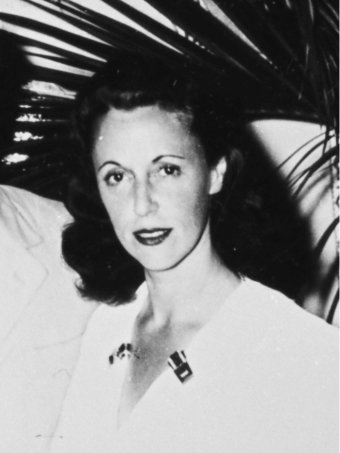
The Baroness is a superficial biography of Pannonica Rothschild, born into the English branch of the family when Rothschild was a byword for big money and grand spending. She made a good marriage, had children then left her husband of 15 years to live in New York and obsess about jazz. There you have it.

Sure, there is more to her life story than that, but what Hannah Rothschild (a relative of Pannonica or ‘Nica’) has written is a simple, conversational pseudo- account of a life that could have been fascinating. Unfortunately, the friendly-biographer style of Rothschild, constantly referring to ‘when I interviewed Aunt Miriam', combined with either a lack of good information about Nica or a lack of research, means that this book feels short on both professionalism and those delicious details that allow the personalities of the individuals to leap off the page and engage you in their stories.

Nica as a young woman. 
Rothschild provides just enough historical detail to paint the picture of who the Rothschilds are, where they came from, and what they do. There can be little doubt that her insider knowledge and probable unrivaled access to Rothschild family members and paper has given this book a nice personal touch.

There are few people in this world born into the privilege that many Rothschild children receive. While it is true that with that privilege comes expectations, the weight of history and a version of ‘lack of freedom’, many people, including myself, would be happy to be born into such a world of wealth and connections.

Nica's Bentley. The Bentley and 'The Baroness' became icons in the down-and-out jazz scene of 50s and 60s New York.

Nica Rothschild came across as a character but also an almost cookie-cutter product of her time and class. The author would violently oppose this view, I am sure. However I felt that as much as she was a ‘rebel’, Nica’s unabashed confidence, brashness, spending and don’t-give-a-damn attitude are very much by-products of belonging to a class where you could afford to act that way.

Nica’s great act of rebellion - leaving her unhappy marriage to become a matriarch of the New York jazz scene in the 50s and 60s - led her down an un-trodden path and brought her into contact with some of the greatest musicians of the 20th Century. Most notably Thelonius Monk, the jazz genius, drug addict and troubled soul who became the great obsession of Nica’s life. Interesting, yes. Rebellion? Not really. Not if you think of other society ladies who break free from expectations – people such as Jane Digby or the Mitford girls. Maybe I’m missing the point and not really allowing myself to be impressed. However, it seems to me that when you can keep hold or your Bentley, pearls and furs while patronising all and sundry in the New York underground, life can’t be that tough.

 Nica and Thelonious Monk - the great obsession of her life.

I have read some biographies of society ladies; people who seemingly live quite shallow, uninteresting lives. However, the details that are revealed and the personalities that are allowed to come through the writer’s words create interest in their stories. To gloss over an incident is to make it ordinary: 'Oh, they stole light aircraft from the army and flew over Africa, one time landing amongst a tribe of pygmies' sounds almost commonplace when you don’t put any layers into the event. It is the impressions, the people and the details that make a story worth reading and that is what is lacking in this university assignment of a book.

Perhaps I am being too harsh. I do tend to judge more severely a book that doesn’t engage me and I did not want to pick up The Baroness once I’d started it. However, to each their own and if you want a light-hearted portrait of an interesting woman, look at this book.

Meanwhile – can anyone recommend a good history of the Rothschild family? I’d love to read one.
Related Posts Plugin for WordPress, Blogger...